


Swiss watch brands sit at the top of the horological world for reasons that go well beyond marketing. The Swiss watchmaking tradition is hundreds of years old, shaped by geography, culture, and an obsession with precision that produced some of the most technically advanced and aesthetically celebrated timepieces ever made. Understanding the major Swiss houses is a foundation stone for anyone serious about watches.
This guide is not exhaustive. Switzerland has hundreds of watch manufacturers across every price point. What follows is an introduction to the houses that defined the industry and continue to set the standard.
Rolex
No name in watchmaking carries more universal recognition than Rolex. Founded in London in 1905 and relocated to Geneva shortly after, Rolex spent the early part of the twentieth century building a reputation for reliability and innovation. The Oyster case, introduced in 1926, was the first truly waterproof watch case. The Datejust, Submariner, Daytona, and GMT-Master followed over subsequent decades, each becoming a category-defining reference.
What makes Rolex remarkable is not that it produces the most complicated watches in the world. It is that it produces extraordinarily consistent, robust, and desirable watches at volume, while maintaining control over almost every component in-house. The secondary market for Rolex watches reflects decades of demand that supply has never comfortably met.
Patek Philippe
If Rolex is the most recognised Swiss watch brand in the world, Patek Philippe is the most revered. Founded in Geneva in 1839, Patek Philippe has operated as an independent, family-owned manufacturer throughout its history. Its movements are among the most complex and painstakingly finished in the industry, and its designs have a restraint and elegance that has proved remarkably enduring.
The brand is famous for its long-running advertising campaign with the line “You never actually own a Patek Philippe. You merely look after it for the next generation.” It sounds like marketing. It also reflects a genuine truth about how these watches hold and appreciate in value over time.
Audemars Piguet
Audemars Piguet introduced the Royal Oak in 1972, and in doing so changed the Swiss watch industry permanently. Designed by Gerald Genta, the Royal Oak was an integrated-bracelet sports watch in stainless steel that sold at a luxury price point. At the time, it was a commercial gamble. In retrospect, it was one of the most influential watch designs of the twentieth century.
The brand remains independent and family-associated, producing movements of exceptional quality across its Royal Oak, Royal Oak Offshore, and Code 11.59 collections. Its position at the upper tier of the Swiss watch market is firmly established.
Tudor
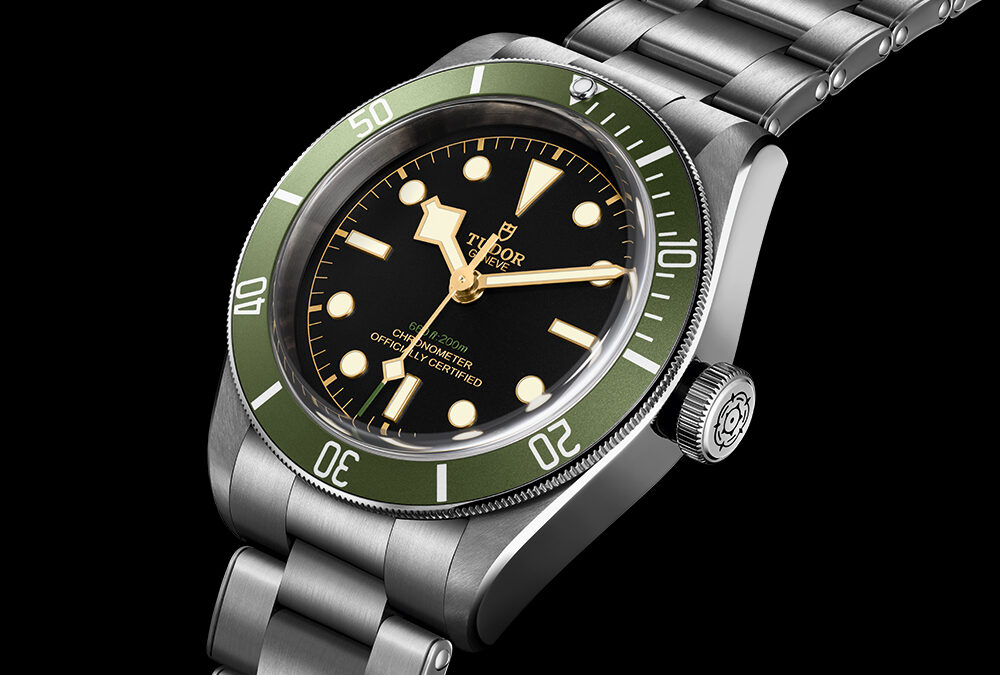
Tudor deserves a place in this list not simply because of its relationship with Rolex, which operates as a sister brand sharing manufacturing infrastructure, but because of what it has become in its own right. The Black Bay, introduced in 2012, brought a legitimate vintage-inspired dive watch to market at a fraction of comparable Rolex pricing. The Pelagos added a modern, technically advanced dive watch with a distinctive titanium case and bracelet.
Tudor has done something difficult: built an identity that stands independently of its more famous sibling while benefiting from the same manufacturing rigour. It is one of the most interesting positions in contemporary Swiss watchmaking. Head over to our live Tudor competition for a chance to start building your collection.
IWC Schaffhausen
IWC sits in Schaffhausen rather than Geneva or the Jura, a geographic distinction that reflects its origins as a manufacturer founded by an American engineer in 1868 with the intention of combining Swiss craftsmanship with American industrial methods. The results have been a series of watches that balance engineering credibility with genuine elegance.
The Portugieser, Pilot’s Watch, and Portofino collections each occupy distinct aesthetic and functional territory, and the brand’s movements have a long-established reputation for reliability and accuracy.
Omega
Omega’s claim to fame extends from the Moon to the racetrack to the cinema. The Speedmaster was selected by NASA for the Apollo programme and worn on the lunar surface. The Seamaster has been associated with James Bond since 1995. The Constellation was one of the first precision-certified watches in commercial production. These associations are deserved, not simply inherited.
Omega produces watches across a wide range of price points relative to the top of the Swiss market, which makes it an accessible entry point into genuine Swiss horological heritage. Its in-house movements, particularly the Master Chronometer-certified calibres, are technically excellent and independently certified for magnetic resistance.
What this means for watch competition entries
Understanding the houses behind the watches being offered matters when you are entering a competition for a premium timepiece. It informs what you are competing for, what it is worth, and why it represents the kind of opportunity most watch enthusiasts do not encounter through conventional retail.
The watches featured across The Time Vault Club competitions are drawn from the upper tier of Swiss and British watchmaking. To understand more about the platform and how watches are selected, the about page explains the curation approach and what the club stands for.
From iconic Swiss manufactures to bespoke British design, the watches offered through The Time Vault Club represent the kind of horological quality this guide covers. Browse the current lineup and enter the competition that speaks to your taste.